Vancouver Island's south coast gets between 800 and 2,400 mm of rain a year depending where you stand, most of it between October and March, much of it driven horizontally. Cladding here is not a finish. It is the first of several layers whose combined job is to keep a building dry enough to last a century.
Which is why the first thing to say about siding choice is that it matters less than what goes behind it.
The rainscreen comes first
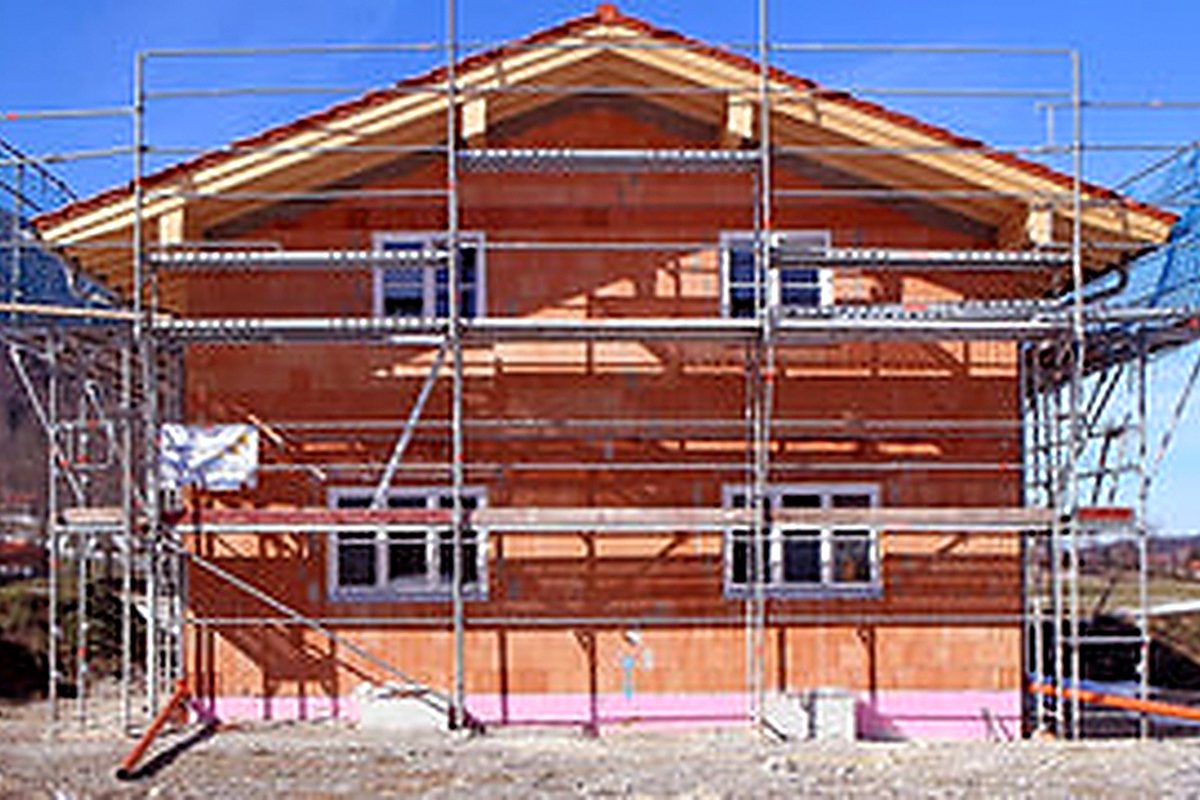
A rainscreen is a drained and vented cavity — typically 10 mm or 19 mm of vertical strapping — between the water-resistive barrier and the cladding. It gives any water that gets past the cladding a path back out, and it lets the assembly dry from both sides.
In BC's coastal climate zone, a rainscreen is required for most residential cladding assemblies, and it is the single most important detail on your exterior. A $60,000 cedar job over a face-sealed wall will fail before a $30,000 vinyl job over a properly drained one. Get this right and the material choice becomes a question of budget, maintenance appetite and how you want the house to look.
Where water actually gets in
Not through the field of the cladding — through the openings. Roughly nine in ten envelope failures we open up start at a window head, a sill without a pan, a deck ledger or a penetration nobody flashed. Whatever cladding you choose, spend the money on self-adhered membrane at every opening and a sloped, back-dammed sill pan under every window.
The five options, compared
| Material | Installed $/sq ft* | Realistic lifespan | Maintenance |
|---|---|---|---|
| Western red cedar (bevel or board & batten) | $18 – $30 | 40–60 years | Stain or oil every 5–8 years |
| Fibre cement (e.g. James Hardie) | $14 – $22 | 40–50 years | Repaint 15–20 years; caulking sooner |
| Engineered wood (e.g. LP SmartSide) | $12 – $19 | 30–40 years | Repaint 10–15 years; keep cut ends sealed |
| Vinyl | $8 – $14 | 25–35 years | Wash annually; no painting |
| Metal panel (steel/aluminium) | $20 – $38 | 50+ years | Wash; watch for galvanic contact near salt |
*Installed cost includes strip-out, membrane, rainscreen strapping, cladding, trim and fasteners on a straightforward two-storey island house. Complex geometry adds 15–30%.
Cedar: beautiful, local, demanding
Western red cedar is grown here, mills here, and looks like it belongs on this coast because it does. It's dimensionally stable, naturally rot-resistant and it can be repaired board by board.
The conditions are non-negotiable: kiln-dried material, back-primed on all six faces before installation, stainless steel fasteners (galvanised will bleed rust stains within two winters), and a finish schedule you actually keep to. Left to weather naturally it silvers beautifully on the south side and grows a green film on the north — which some owners love and some regret.
Fibre cement: the island workhorse
If we quote a re-clad without a specific request, this is usually what's in it. Factory-finished fibre cement is dimensionally stable, non-combustible, holds colour for 15 years under warranty, and installs predictably. It comes in lap, panel, shingle and board-and-batten profiles, so it can read traditional or contemporary.
Its weaknesses: it's heavy and brittle to handle, cutting produces silica dust that requires proper controls on site, and the caulked joints at trim need attention every 5 to 8 years. Cut edges must be primed — an installer who doesn't is leaving you a wicking problem.
Engineered wood: value with a caveat
Engineered wood siding is lighter, easier to cut and cheaper than fibre cement, with a convincing wood texture and long factory warranties. It performs well when installed exactly to spec — which means minimum ground clearances, sealed cut ends, and no contact with standing water or splash-back from a hard surface. Our reservation is simply that it is less forgiving of installation shortcuts than fibre cement, and on a rainy coast that matters.
Vinyl: honest about what it is
Vinyl gets dismissed more than it deserves. It keeps water out, it never needs painting, and modern profiles are far better than the 1990s product most people picture. Over a proper rainscreen it will do its job for thirty years.
What you're accepting: it dents, it fades unevenly on southern exposures, it can distort near a barbecue or a reflective window, and the trim details — J-channel around every opening — are hard to make look considered. In a neighbourhood of heritage or high-value homes it will show up in an appraisal comparison.
Metal: durable, contemporary, salt-sensitive
Standing-seam and flat-lock metal panels last decades and look sharp on modern island architecture. Two cautions near salt water: specify a coastal-grade coating (not a builder-grade painted steel), and be rigorous about avoiding galvanic contact — dissimilar metals at fasteners and flashings corrode fast within a kilometre of the ocean.
Mixing materials without it looking busy
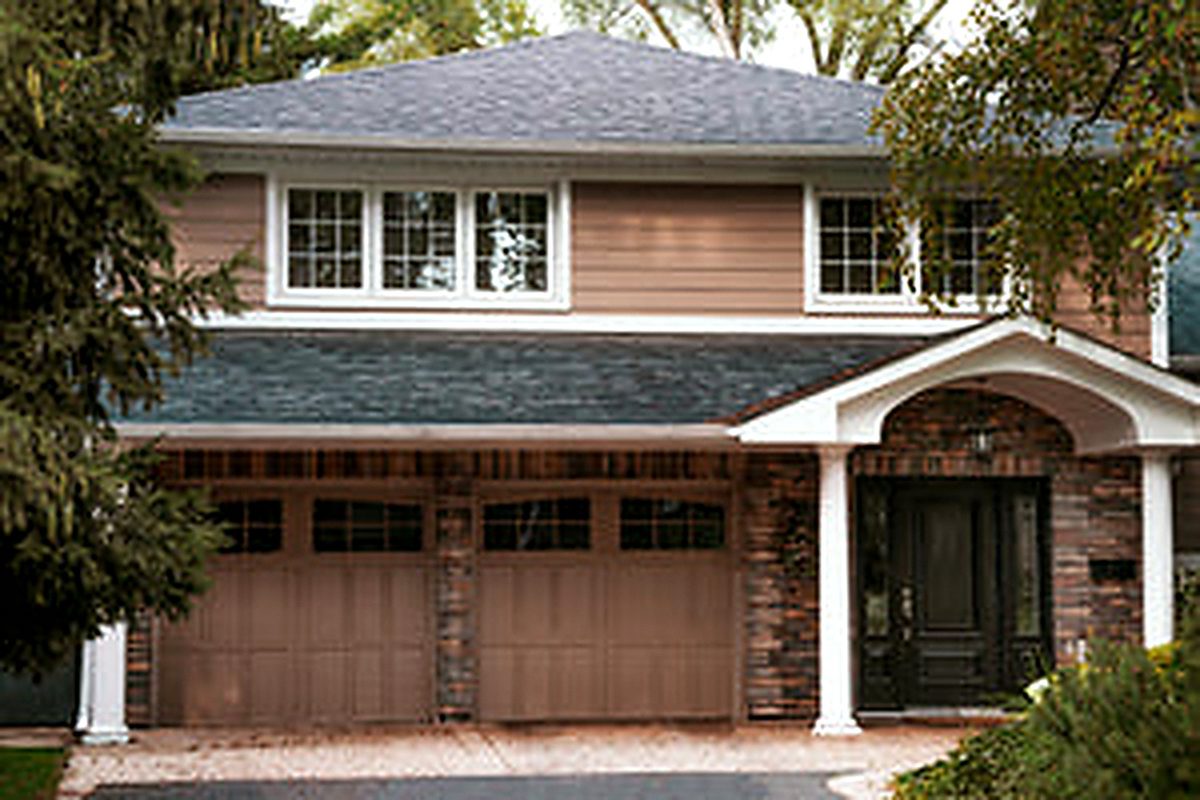
Two cladding materials, maximum, and let one clearly dominate. The usual successful combination here: fibre cement or engineered lap for the main field, with cedar in a contrasting orientation on one or two features — the entry, a gable, a bay. Change material at an inside corner or a horizontal band, never mid-wall, and keep the trim colour consistent throughout so the eye reads a single building.
Do the insulation while the walls are open
A re-clad is the one opportunity you will get to add continuous exterior insulation without touching the inside of your house. Adding 38 to 50 mm of rigid mineral wool or foam outboard of the sheathing eliminates thermal bridging through the studs and typically improves whole-wall performance by 30 to 45 per cent.
It adds roughly $4 to $7 per square foot and it changes your window detailing, so it has to be decided at design, not on site. If you are re-cladding anyway, it is the best-value energy upgrade available to an island house — check current provincial and federal retrofit rebates before you finalise the scope.
The short version
- Best all-round for most island homes: factory-finished fibre cement over a 19 mm rainscreen.
- Best where the house deserves it: cedar, back-primed, stainless-fastened, with a maintenance schedule you'll actually keep.
- Best budget that isn't a false economy: vinyl over a proper rainscreen, with money redirected into flashing and insulation.
- Best for contemporary builds near the water: coastal-grade metal, detailed carefully for galvanic separation.
Talk it through with someone who builds these
We give straight answers on the phone whether or not you hire us. If this guide raised a question about your own house, get in touch — or read about our exterior renovations service.
Written by Marcus Feld, Founder & lead estimator at Island Home Renovations.